Showing posts with label fatigue. Show all posts

Wednesday, September 28, 2011

Go For the Burn(out)

A very busy summer has left me with blogger fatigue and general irritability. I changed my blog template. Didn't help. So I'm going to whinge on for a bit, but I'm including some pretty pictures at the end. You may just want to skip ahead ...

And That's Not All!

AOPA is really annoying me, whining about how the FAA should provide tail-number blocking for wealthy aircraft owners. Business jets make sense for business (Duh! Hence the name!). If business aircraft are so profitable then they don't need tax breaks and accelerated depreciation schedules to make them make business sense. Right?

AOPA keeps sending me solicitations for life insurance, renter's insurance, and the latest - the opportunity to purchase a subscription to their DVD series. Oh, and you can return the DVD or just recycle it. Who do they think they are, National Geographic?

The editorial tone of AOPA Pilot sure has changed. First there is the faux controversy of their Dogfight series where two diametrically opposed writers (or so we're led to believe) disagree with each other about whether pitch controls airspeed or altitude. Yawn! Or a photo spread about aviation tattoos. Very hip and edgey! What's next, aviation piercings?

AOPA members shouldn't be surprised at the changes that have taken place. Just enter the AOPA president's name into a Google search and see what he was doing back in the early 1990's.

See what I mean? Irritable ...

Amazon to the Rescue!

Amazon has cancelled their associates program for residents of California. Why? Because California legislators and the governor passed legislation that requires them to collect sales tax. Being the magnanimous folks they are, the management at Amazon pulled the plug. Okay, fine. Then they turn around and start lobbying California legislators for sales tax amnesty. Hello? Amazon? Did you not read the news about the State's budget hovering around the edge of the porcelain pony? We're trying to have a civilization here!

So I'm no longer an Amazon Associate. I'm all busted up about that ...

No Taxes, No User Fees


I'll be the first to admit that user fees for GA will hurt. I'd hate to see them implemented. On the other hand, a lot of people seem to be in a budget-slashing, anti-government mood. To quote a line from The Right Stuff - "No bucks, no Buck Rogers." The aviation gasoline tax is  apparently not bringing in enough moolah, so something has to give.

Many pilots have multiple personalities when it comes to taxes and government. No one wants to pay, no one want to be regulated, but everyone is upset when local airports can't make ends meet. Do they think runways, taxiways, control towers, ATC salaries and FBO facilities simply appear out of thin air? Where will the funds for the much vaunted NextGen come from? Maybe AOPA can donate proceeds from one of the marketing promotions ...

NOTAM Madness

There are a bunch of NOTAMs for my local airport due to a bunch of construction projects and the cranes and equipments associated with same. While trying to explain the NOTAM system to a student pilot recently, he had an epiphany: "The trick to NOTAMs is knowing which ones to ignore." Leave it to a neophyte to come up with the good insights.

The NOTAM system has been changed so that it is supposedly easier to wade through, but the almost indecipherable content of each NOTAM remains maddeningly the same. Dates and times in the most foreign format imaginable. Contractions and abbreviations that make normal human beings cringe. And mind-numbing legal boilerplate makes it seem like the FAA and TSA actually want someone to bust a TFR.

Comment Etiquette

I've been getting more and more comments that are lame attempts at using my blog for third-party marketing. The comments are usually complimentary, but they contain a link to some site that often has little to do with the post I've written. How very crafty and clever! Folks who post these things need to know that they aren't fooling anyone and their lame links will never see the light of day on this blog.

Some commenters post things when they really want to send me a message. Please, use my email address. It's shown on the right edge of my blog. If you're using a blog reader, you may need to actually visit my blog directly to see it. Please don't comment if you're trying to send me a personal message. Use email, 'K?

If you don't agree with something I written and you want to post a comment, by all means do so. Keep in mind that I have the final say in which comments are published. Comments that I find rude, inflammatory or otherwise piss me off will go to /dev/null. If you don't understand irony, this might not be the place for you and you are hereby advised to avoid reading my blog. If you don't like my ideas, that's fine, too. Don't waste your time with verbal jousting, move on to another blog you like. Or send a letter to the AOPA editors and tell them how much you like arguments about engine leaning and racy photos of tattoos.

At least I'm not irritated when I'm flying.

Now the pretty pictures I promised ...


Alameda Sunset

Another Bay Area Sunset

FAF VOR 6 at KAPC

Odd Valley Stratus for Summertime

Delta Farmland

Slipping the Surly Bonds

More Odd Stratus

Right turn 090, Join V244, Resume Own Nav ...

Montezuma Windmills

More Windmills

Tiny Full Moon (see it?)

Northwest of KNUQ

Sonoma Valley Sunset

Northeast of Eden

Vectors across the Bay

VFR, Kinda, Sorta ...

Contact Norcal Departure ...

Salt Ponds and Stratus

Again with the Salt Ponds?

San Pablo Bay at Sunset

Guess Where?

Short final, KHAF RNAV RWY 12

Again with the marine layer?

Surreal Delta Light

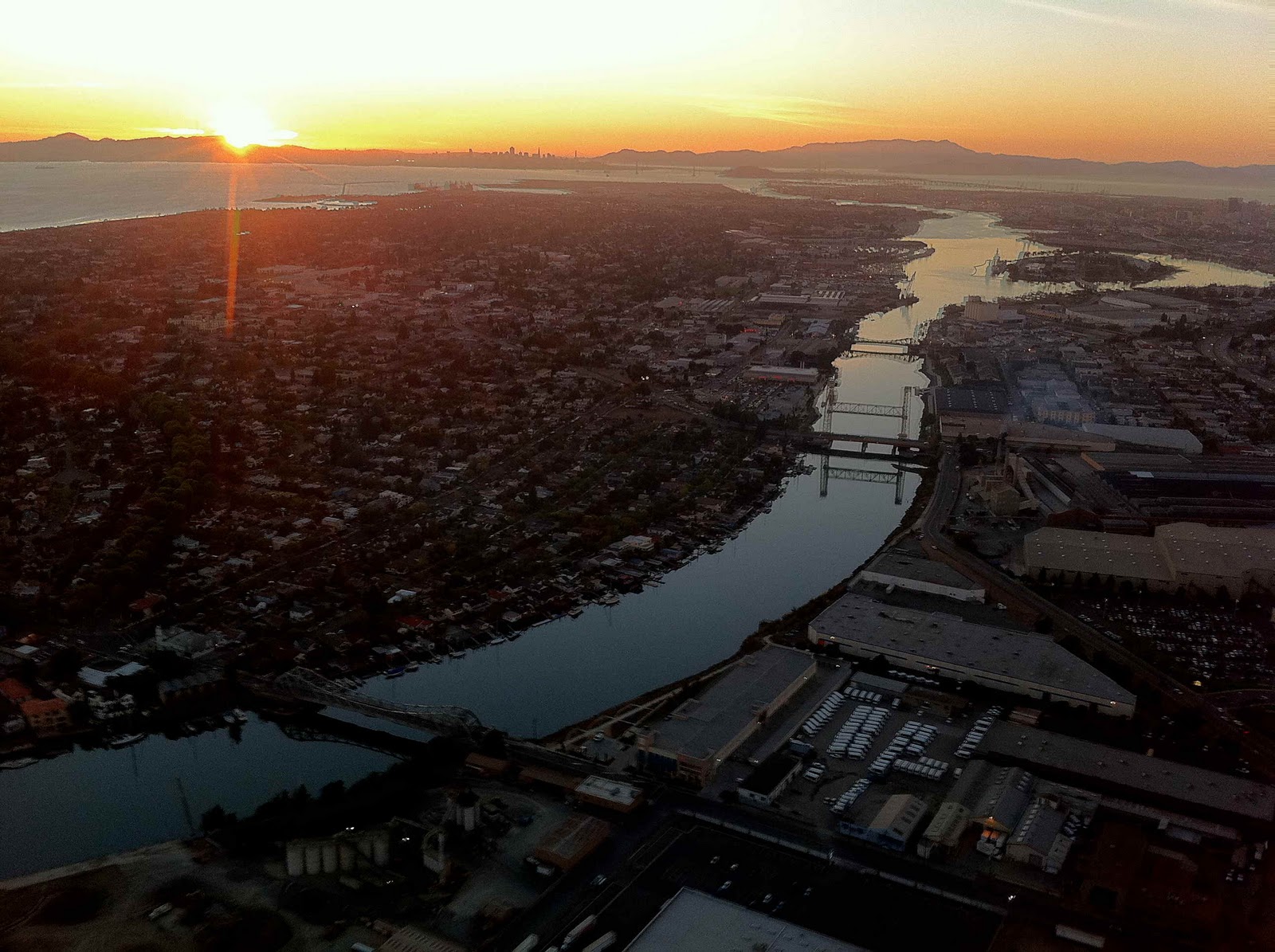
Alameda Estuary at Sunset

Friday, August 12, 2011

Long Odds, Happy Endings

Pilots, by and large, like to be in control and there are many ways to accomplish that goal. One way or another we have to manage risk if we're to maintain control. One way to manage risk is thoroughly planning each flight, but the best laid plans don't always pan out. Prudent pilots like to have more than one plan - the illustrious Plan B. There are folks out there who do little or no planning, just assuming that everything will be fine. Perhaps they are optimists or believe themselves to be Super Pilot, capable of handling anything than arrises. Having one or more back-up plans, just in case, is a wise choice because the unexpected is always waiting for us. It's all a matter of odds.

Rushed and Forgotten

A busy schedule recently had me instructing in seven different aircraft types in seven days. Long hours and fatigue are not good ingredients for beginning a safe flight. That crossed my mind as I was running out the door last week to head to the airport. It also crossed my mind that my minimalist flight bag felt lighter than usual. This was just a passing thought until, settling into the right seat of the aircraft in which I was about to instruct, it became obvious why my flight bag was so light. I'd left my iPad at home and so it was time for an unplanned test of my back-up strategies: Using my iPhone and the minimal selection of paper charts I keep in my flight bag.

SkyCharts Pro and ForeFlight work just fine on the iPhone, though there's no GPS to be had. That's because, being a good citizen, I put my iPhone into airplane mode before takeoff and that disables bluetooth. Not to worry because plan B was the very capable panel-mounted GPS receiver in the aircraft.

With the iPhone I can do virtually everything normally done on the iPad with the main disadvantage being the small size of the iPhone's screen. There were a few more differences: I haven't enabled multi-tasking gestures on my iPhone and some of the user interface details of ForeFlight are different from the iPad version. I appreciate a good challenge so it was time to adjust, adapt, and overcome.

Taking Notes, iPhone style

My weapon of choice for writing notes in flight is the iPad app Penultimate, but it isn't supported on the iPhone. Turns out there is a free iPhone app that offers similar features. Sure, I had to write smaller letters and use more pages, but Handwriting worked surprisingly well. There's no erase or undo. If you make a mistake, just start a new note. Did I mention it's a free app?


Back-up Paper Charts

Printing paper copies of local terminal procedures should be a part of every iPad pilot's back-up strategy. For me, nothing beats ReadyProcs, a Java-based app that runs on a bunch of different operating systems. I print out a selection of charts, in booklet format, staple them and slip them in my flight bag. No muss, no fuss.


In the unlikely event of an iPhone failure, I still have a basic complement of paper charts.


All in SloMo

Lately I've been fortunate to teach occasionally in a new, air conditioned Cirrus and the AC certainly does reduce fatigue in hot weather. Climbing out on top of a Bay Area cloud layer, I watched as my GNS 5870 bluetooth receiver came unstuck from dashboard, fell between my knees, glanced off the carpeted shroud that covers part of the AC (the evaporator unit, I think) under the right front passenger seat, before it disappeared with an odd rattle. Moving my seat back and feeling around confirmed my worst suspicion: My bluetooth GPS must have fallen through one of the numerous gaps in that shroud. It would have to be retrieved once we were back on the ground.

The interesting part was that in spite of being shielded by a fair amount of metal, the seat itself, and 175 pounds of pilot, the GNS 5870 kept satellite lock for the rest of the flight. The iPad continued to show the same ground speed and location as the G1000. Pretty remarkable ...

Back on earth, it became clear that tools would be required to retrieve the GPS. I carefully removed two bolts from the front of the AC shroud, but another fastener underneath the right seat still held the shroud in place. Uncomfortable with the idea of removing the seat, I was able to lift the front of the shroud enough to see the GNS 5870 lodged on the inboard side of the AC equipment and retrieve it. We replaced the two bolts and I intend to try leaving the GPS in my shirt pocket while flying air conditioned Cirrus aircraft!

Something New under the Sun

Pilots who rely on GPS got a wake-up call recently as increased solar flare activity began to affect GPS and WAAS signal integrity. It's important to remember that GPS, like any navigational system, has limitations. Solar activity can affect GPS signals and that's just what happened last week.

WAAS LPV availability on 8/6/2011

Things are mostly back to normal, but the Northeast and the Upper Great Lake states appear to have been most affected on the date shown. The unusual solar activity is forecast to continue. Regardless of where you live, be ready to navigate by alternate means and don't count on getting LPV minima on RNAV approaches. To access the current status of the LPV service volume (along with other cool GPS stuff), you might want to bookmark this link.

Power of ... Love

After our basenji Hunter passed away in 2008, we waited a year before deciding to get a new dog through Basenji Rescue and Transport (BRAT). We adopted a pair of tricolor basenji about 2 1/2 years ago and though it was initially challenging, it has been immensely rewarding. When Rio and Kadee (aka Taz) came to us, a lot of training and compassion were required. We were Rio's fifth home and it was clear that someone along the way had been unkind to him. He was very mistrustful of men, in particular, and easily frightened. Unwinding his fearful behavior required a lot of patience.

Kadee came to us with the name Taz and though she became comfortable in our home, she remained aloof and distant. After about a year, it occurred to me to try calling her by her original name, Kadee. The results were remarkable and if you ask me, anyone who says dogs don't have long memories is mistaken.

Here's a photo of Rio and Kadee, taken shortly after they'd come to live with us. I'd forgotten how underweight Rio was at the time - just under 20 pounds.


Here's a photo from last week. Kadee is more attentive and Rio now weighs in at a normal 24.5 pounds. In a highly competitive society, it's good to stop and remember that care, attention and love can overcome even longest of odds.


Monday, May 16, 2011

Rumors of my demise ...

The last few weeks have been hectic and have offered precious little time for writing blog posts. A trip to SoCal, some pressing house projects, and a busy teaching schedule all conspired to keep me otherwise occupied. Nevertheless, I've been reading, flying and teaching and have been making mental notes about blog-worthy topics.

CFI Punching Bag

Two of the current hot topics in GA are the shrinking number of pilots and the effectiveness of flight training. The newly revised Flight Instructors Model Code of Conduct is the latest installment in the "what's wrong with flight training" discussion. AOPA started banging this drum at one of their conventions and has been repeatedly mentioning it in virtually all of its publications and emails.

Like it or not, we live in an age where public discourse and debate often involve a peculiar use of language and a reliance on repetition to manufacture consent. Whether you call it double-speak, framis, or baffle-gab, we are bombarded with repetitive slogans designed to appeal to emotion rather than intellect. Using logic and reasoning requires us to get our thoughts in order, assemble the facts that are known, consider competing claims, and simultaneously hold conflicting ideas in our minds so that we may evaluate them: In short, it's hard work. The fact that someone saw the need to create a model code of conduct for flight instructors (there's one for mechanics and others, too) would indicate that there are problems within the flight instruction community. Just what those problems are depends on one's perspective.

The code addresses instructor responsibilities, training and proficiency, security, environmental issues, using technology, and promoting aviation instruction. Just a few of the stated benefits of adopting this model include improved pilot training, personal responsibility, instructor contributions to society at large, self-regulation as an alternative to regulations, and promoting recognition of instruction as a highly respected and rewarding profession. The code encourages instructors to be respectful of the risks and dangers of flying, act like professionals, manage stress and fatigue, conduct their flights like airline pilots, and not have sex with their students. The opposite of this sounds like pretty average behavior for 17 to 22 year olds and though I don't have the data to back this up, this is likely the average age range for the majority of active aviation instructors.

What the Market will Bear

The most important aspects of aviation safety start with flight instruction, yet CFIs are enduring low pay and long hours. Regulations allow CFIs to give up to 8 hours of flight instruction per 24 hour period, 7 days a week, 365 days a year and that's what many instructors do just to make ends meet. By the time an instructor has finished teaching his or her second flight lesson of the day, the instructor's ability to provide quality instruction has likely been exhausted. Income levels that encourage instructors to teach three or more lesson per day do not contribute to high-quality learning experiences or professional behavior. The mere existence of a model code of conduct is not going to change the situation.

Most pilots become instructors because they dream of a better flying job and to get that dream job, a young pilot needs to log flight time. So many instructors are a young, motivated group at the bottom of the aviation food chain desperate to provide low-cost labor in exchange for flight time. This is an aviation tradition that the FAA has long supported if not enabled outright.

There's absolutely nothing wrong with pilots who do a stint as an instructor so that they can move on, but let's not cloak it in high flautin' talk about professionalism, high levels of proficiency and customer service. This is a business relationship between employers and employees, plain and simple. The profit margins in aviation are so razor thin there is no way to pay instructors like professionals. The mere existence of a model code of conduct is not going to change the situation. One benefit of the current flight training model is that it separates the wheat from the chaff because by the time an instructor is ready to move on to an airline job, they will have already been acclimated to long hours and low pay.

Easy Target

Flight instructors are the most active pilots in the GA community, they fly more hours than the average GA pilot, and they are crucial to training the next generation of pilots. The impact of flight instruction on the pilot population is unmistakable, but there are many reasons why student pilots decide to drop out. AOPA says that the cost of flight training, aircraft rental, and aviation fuel are not important factors. I find this claim to be utterly fantastic and unsupported: The folks they are sampling in their research must travel in different circles than the pilots I talk to.

While AOPA and others are busy trying to "fix" the flight training model so that fewer pilots drop out, little is being done to improve the average flight instructor's day-to-day life. Quite the opposite, from where I sit the solutions being put forth simply perpetuate the status quo with regard to flight instructors' working conditions.

Flight instruction, like all aviation endeavors, is a tough business. Learning to fly is a difficult, complicated, and expensive proposition. Those who stick with it, whether we're instructors or weekend flyers, do so because we love aviation. I'm all for making the flight training experience as rewarding and efficient as possible. I strive to do my best as an instructor because I enjoy teaching, mentoring other instructors, and helping pilots reach their flying goals. Being a CFI is one of the most rewarding things I've ever done, in spite of the hardships that come with living at the bottom of the food chain. From my perspective the model code of conduct is, at its best, a distraction and, at its worst, insulting. The efforts of AOPA and the folks who authored the Flight Instructor's Model Code of conduct may be based on good intentions, but good intentions can also lead to a decidedly undesirable destination.

Monday, April 18, 2011

Sleepless in America

It seems that hypoxia, carbon monoxide poisoning, alcohol intoxication, and sleep deprivation all have something in common, but it's hard to explain the tough talk from Secretary of Transportation LaHood and FAA Administrator Babbitt on the subject of air traffic controllers falling asleep. Both men have said that air traffic controllers sleeping on the job is unacceptable and each has promised to get to the bottom of the problem. Some controllers who have fallen asleep have reportedly been suspended, some may face disciplinary action, and the head of the FAA's Air Traffic Organization has resigned, but there hasn't been much recognition of how the FAA's status quo, set by the folks at the very top, has helped create the problem.

The FAA has announced new duty time rules that, among other things, will ensure controllers get at least 9 hours of rest between shifts as opposed to 8 hours. While this is, in principle, a step in the right direction, it's not what experts recommend. Sleep researchers have a simple solution - allow workers to take naps during their shift. For his part, LaHood has dug in his heels and said that controllers will not be "paid to sleep." This is a curious stance.

Sleep researchers tell us that on average, Americans are getting under just 7 hours of sleep per weeknight. While there is a small percentage of the population that can function well on 5 hours or less of sleep per night, researchers believe this is a genetic trait and not a matter of adaptation. Most of us need 8 hours to function at our best and all folks those getting 7 hours of sleep go through their days with measurable decreases in ability to concentrate and reduced reaction time. The thing is, a person under the influence of sleep deprivation is likely to think that everything is just fine even though their cognitive skills are impaired.


Let's not pick on just Secretary LaHood and Administrator Babbitt because most of the country is in denial about sleep. Sleep deprivation is worn by many as a sort of badge of honor from medical residents and interns to commercial pilots. The difference would seem to be that hospitals, maritime sailors, fire departments, medivac crews, even a few international airlines allow employees to take a nap or sleep during their shifts. A pilot who flew for an air ambulance company once told me that EMS actually stands for "Earn Money Sleeping." So why should the FAA be any different if the research shows an improvement in job performance on a graveyard shift comes from simply taking a nap?

The health consequences and the associated health care costs of long-term sleep deprivation and circadian rhythm disruption are well-documented: Hypertension, weight gain, cardio-vascular disease, diabetes, increased risk of "sudden death," and shorter lifespan. My personal experience? Four days after I quit my freight-flying job I woke up feeling great, but with the sobering realization that I had been impaired by sleep disruption for months without fully realizing it.


As Phil Zimbardo once observed, you'll never get to the bottom of a dysfunctional organization unless you first go to the top. There may be an explanation for the loss of objectivity when someone is short on sleep, but it's hard to support LaHood's hard-line stance against napping. The Roman Empire's punishment for sleeping on duty may have been death, but we live in more informed, and scientifically enlightened times. Perhaps Secretary LaHood should sit down, read the research, and sleep on it.

Monday, January 31, 2011

School of Hard Knocks


Just back from a flight, Mal Raff warned me ominously, "It's very turbulent up there." To which I replied dryly, "Good, it will keep me awake." This developed into a sort of tradition where Mal would provide me a pilot report (PIREP) for turbulence and I would play the part of the brave pilot who never admits to being bothered by turbulence. This was all an act. While I've become somewhat inured to turbulence, I'll be the first to admit that I've encountered turbulent conditions that scared the daylights out of me. Pilots and passengers universally dislike turbulence and the ones that say otherwise are either fibbing or are in need of some serious couch time. Thankfully there are several strategies for avoiding turbulence, handling it when it is unavoidable, and making PIREPs that accurately describe the character and degree of turbulence you just encountered. (Note that I won't be delving into clear air turbulence or CAT, since few GA pilots are flying at altitudes where it is a factor).

Get Briefed

Student pilots learn early on that weather reports and forecasts can provide plenty of clues about the likelihood of encountering turbulence. Getting a briefing not only fulfills the regulatory preflight action requirement, it can help you anticipate turbulence well before the PIREPs start flooding in. Sure there are pilots out there who skip the pre-flight briefing or don't examine the information carefully. Some of them even brag about it, but you're not like those pilots, right? The National Weather Service has several products that address turbulence that I'll illustrate using the Aviation Digital Data Service site, which now offers a Qualified Internet Content Provider login.

AIRMET tango (think "T" for Turbulence) is of interest primarily to pilots of smaller aircraft and should be released when conditions are ripe for moderate turbulence over a large area (3000 square miles or more). There are also AIRMETs sierra for IFR conditions and zulu for icing. Problem is that AIRMETs describe the area being affected in a sort of connect-the-dots fashion using three letter identifiers for VOR stations and distances to define the dots: Not very user-friendly. Even if you are familiar with all the VORs, assembling a mental map of the affected area can be challenging.


ADDS has a product called G-AIRMET that provides a map-like depiction of areas affected by AIRMETs and SIGMETs. You can even look at an animated representation of how the conditions will unfold over time. Graphical AIRMETs are also depicted on sites like Avnwx.com. Even ForeFight and cockpit XM weather displays will depict AIRMETs on a map, though you'll have to dig a bit to access them.


Forecast winds aloft will also give you an idea whether or not turbulence and wind shear are on today's menu. Combine strong winds aloft with rough terrain and the ride gets bumpy at lower altitudes, downwind of the terrain (an area known as the lee side). If the wind direction and velocity is forecast to change abruptly as altitude increases, expect wind shear - a sudden change is wind velocity or direction over a short distance. Wind shear can occur over a horizontal distance across the ground or over a vertical distance as you climb or descend. If you plan to fly over rough terrain or mountains, forecasts winds aloft in excess of 20 to 25 knots should give you pause. ADDs lets you access winds aloft forecasts in textual or graphical format.


PIREPs (pilot reports) are like AIRMETs in that decoding text versions requires knowledge and practice. My favorite tool for PIREPs is the ADDS Java PIREPS Tool. Launch most any browser that supports Java (this excludes the iPad), select part of the continental US, and choose the types of reports you're interested in. Symbols for turbulence will appear at locations on the map where the PIREPS were reported and you only need to mouse-over those symbols to access the details. You can access PIREPs on Avnwx.com and other sites, but they are strangely missing from the mobile versions of ForeFlight.

While pilots of smaller aircraft are more susceptible to and tend to over-report the intensity of turbulence, pay particular attention to PIREPs from transport category aircraft since they are flown by flight crews who have a lot of experience with turbulence. More on this later.


If the weather forecast is waaay behind what is actually happening, a Center Weather Advisory or CWA can be issued. The Aeronautical Information Manual strays into neologism by calling the CWA a nowcast: "By nature of its short lead time, the CWA is not a flight planning product." To which I say, "Horse feathers!" If you get a pre-flight briefing and it contains a CWA, you most certainly can use it for pre-flight planning purposes. If you are already airborne, CWAs are available over the Hazardous In-flight Weather Advisory Service (or HIWAS) that is broadcast over the voice component of many VOR stations. Just tune in the VOR and listen.

Studying Turbulence

While much of the country has been enduring snow and cold, unseasonably warm weather settled over coastal areas of Northern California last week. This January weather gift was due to a stationary area of high pressure that kept the jet stream and the wet weather well to the North. The downside was it also generated persistent Northeasterly winds aloft that created a lot of turbulence and low-level wind shear in the San Francisco Bay Area.

Strong winds flowing over terrain is much like fast-moving water flowing over rocks in a stream: You may not be able to see the air boiling and swirling on the lee side of terrain, but rest assured it is there. You should only have to experience this once to know the lee side is not a pleasant place to be when the winds are howling, yet the lee side is exactly where several pilots reported encountering turbulence. Duh!

My student had planned a dual cross-country flight from Oakland to Columbia and a Center Weather Advisory was in effect for moderate to severe turbulence. The first part of the route would start with a climb-out on the lee side of the Oakland/Berkeley hills - the heart of the action. The surface winds were calm, but the winds at 3000 feet were forecast to be 050˚ at nearly 30 knots, so our plan was to avoid or minimize the turbulence by climbing as high as possible as quickly as possible. We discussed what we'd do if we encountered turbulence (more on that later).

Contacting the tower for takeoff, my student requested an early hand-off to Norcal so we could ask for a climb into class bravo. Reaching 800', the tower handed us off and Norcal approved our climb into bravo. The result was occasional light chop while climbing and a smooth ride all the way to Columbia. Cruising comfortably at 5,500 feet, we made a detailed PIREP to Flight Watch. Opening the VFR flight plan on the way back, the Flight Service specialist warned us of even more PIREPs of moderate to severe turbulence.

Our strategy for the descent back into Oakland was similar to what we'd used on departure: Stay above 3,500 feet for as long as possible and be prepared for turbulence during the descent. We requested a bravo clearance from Norcal, explaining it was to avoid turbulence. They were fine with us crossing Lake Chabot at about 3,500 feet, then we started our descent. We encountered continuous light chop, occasional moderate chop, and a bit of an updraft. Nothing to write home about.

I've witnessed pilots who were reluctant to make special requests for things like an early turn or a climb into bravo airspace. I'm not sure what causes this reluctance, but I encourage pilots to speak up. If you have a special request and a reason for that request, most controllers will do what they can to accommodate you. Ask and ye shall likely receive.

Back on the ground, we went online to see the PIREP we'd filed, but lo and behold, it wasn't there! Perhaps it wasn't disseminated because our PIREP for mostly light chop was at odds the dire warnings contained in the CWA. Who knows, but my student was not impressed by the results of all our PIREP efforts.

Riding the Beast

It may seem obvious, but ensure your seat belt is snug and tight when you know or suspect you're going to encounter turbulence. Beware of newer seat belts that contain airbags because they can feel like they are tight when they aren't. Old, worn seat belts may be difficult to tighten, but it's worth the effort: You don't want to bang your head on the ceiling when the action starts.

Slow down to at least the published maneuvering speed (Va) for your aircraft at your estimated weight. If you don't know your estimated weight, take a moment to appreciate the advantage of calculating weight and balance before each flight. Once you are flying at or below maneuvering speed, it's highly unlikely your aircraft will experience structural damage from turbulence.

If you have loose items in the cockpit, now is the time to secure them. If the turbulence rises to the level of moderate or greater, you'll know when your ham sandwich takes flight inside the cockpit.

I avoid using flaps in turbulence because in most GA aircraft, the addition of any flaps reduces the aircraft's maximum design load factors. For many GA aircraft, the positive load limit of 3.8G will drop to around 2G and the -1.5G negative limit may drop to 0G. Bottom line: Delay extending flaps until you are preparing to land.

Most GA aircraft are designed to be stable and they tend recover from upsets in pitch and roll without much assistance from you, so let the plane to ride the bumps. You do not need to respond on the controls to each and every bump that you encounter, but when you do use the controls, think of dampening out the variations rather than trying to overcome them. Over-controlling will increase the load on the aircraft and make the ride feel more uncomfortable for you and your passengers. Autopilots tend to over-control in turbulence and they are designed to spontaneously disconnect in moderate or greater turbulence. You may as well disconnect George and hand fly since you'll undoubtedly do a better job. If the turbulence is moderate or greater, do your best to maintain a level pitch attitude and accept variations in altitude as you just let the plane ride.

Updrafts and downdrafts can be difficult to perceive until you have more experience, but a good way to learn is to keep the airspeed indicator in your scan. Increases in indicated airspeed without changes in power or pitch mean you're in an updraft. Decreases in airspeed mean you're in a downdraft. It's not uncommon to need to make dramatic and frequent adjustments in engine power to compensate for updrafts and downdrafts.

If you expect turbulence while descending, remember that altitude is energy: You'll have to reduce the throttle to be able to descend and stay at or below maneuvering speed. If you're one of those pilots who usually descends by just pushing the nose over and trimming, you'll want to rethink that strategy in turbulence.

Your reward for reading this far is that I'm now going to reveal my secret for flying through turbulence: Be patient, stay as relaxed as possible, have a mental image of how you want the plane to be flying, then do your best to make reality match that mental image. Without a concept of how you want the aircraft to be flying, you'll simply be reacting to the conditions. Developing a piloting concept is a deep topic, perhaps for another day.

Making the Call

Do your fellow pilots a favor and make a PIREP when you've encountered turbulence. Less experienced pilots flying smaller aircraft frequently over-report the intensity of turbulence they encountered. Pilots in more rigid, composite airframe aircraft (like Diamond and Cirrus) tend to experience and report a rougher ride that their aluminum-flying brethren. In any case, you can avoid over-reporting turbulence intensity by doing your best to set aside your emotional reaction and using as objectively as possible the following criteria (Aeronautical Information Manual, section 7-1-23, emphasis added).

Light Turbulence - momentarily causes slight, erratic changes in altitude and/or attitude (pitch, roll, yaw). Occupants may feel a slight strain against seat belts or shoulder straps. Unsecured objects may be displaced slightly.


Light Chop - causes slight, rapid and somewhat rhythmic bumpiness without appreciable changes in altitude or attitude.


Moderate Turbulence - similar to Light Turbulence but of greater intensity. Changes in altitude and/or attitude occur but the aircraft remains in positive control at all times. It usually causes variations in indicated airspeed. Occupants feel definite strains against seat belts or shoulder straps. Unsecured objects are dislodged.


Moderate Chop - similar to Light Chop but of greater intensity. Rapid bumps or jolts without appreciable changes in aircraft altitude or attitude.


Severe - Large, abrupt changes in altitude and/or attitude. Large variations in indicated airspeed. Aircraft may be momentarily out of control. Occupants are forced violently against seat belts or shoulder straps. Unsecured objects are tossed about.


Extreme - aircraft is violently tossed about and is practically impossible to control, structural damage to aircraft is possible.


Whenever you are startled or frightened by turbulence, stop and take a breath, then do your best to assess what has happened or is currently happening. On numerous occasions I've talked to pilots who said they encountered moderate-to-severe turbulence, but when I ask them some basic questions it seems they probably encountered light-to-moderate turbulence. One tip-off: If the head on your Barry Bonds bobblehead doll is bobbling, but the doll itself is staying put, it's probably light turbulence.


Brave vs Smart


Turbulence can become a serious risk factor; it is distracting, it adds to your workload, and it's tiring. Combine turbulence with instrument meteorological conditions and/or night time and the risks for single-pilot operations only get worse. If you find turbulence scary and uncomfortable, join the club! There's no shame in being afraid, but there's seldom any excuse for not anticipating or expecting turbulence. With some planning and a little strategy, turbulence can often be managed, but there's nothing wrong with canceling or delaying a flight to avoid turbulence. I'll take a smart and thoughtful pilot over brave and risky pilot any day of the week.

Sunday, January 2, 2011

What's New with You?

The past year brought some interesting changes to general aviation and here are just a few of the items I found interesting.

Pilot Fatigue and Rest Rules

Though many (including high-ranking members of the NTSB) have tried to keep pilot fatigue out of the spotlight, efforts have been afoot to change duty-time regulations for Part 121 and 135 pilots. Many pilots say the proposed rulemaking the FAA announced is actually a step in the wrong direction because it would allow, under some circumstances, for pilots to fly more hours in a 24 hour period that under the old regs. Though I currently do not fly under Part 121 or 135, I believe that all those concerned with aviation safety (pilots, passenger, operators, and the FAA) need to give fatigue the serious consideration it is due. Find a way to ensure that pilots and flight attendents have time to eat, sleep, and tend to the daily chores that the rest of us take for granted. Increasing the required rest period for all crew members to 10 hours per 24 hour period seems reasonable and the flight time rules should be left alone.

Line Up and Wait

After much to-ing and fro-ing, the FAA finally implemented new phraseology for telling pilots to get on the runway and wait for their takeoff clearance. Actually, the phraseology isn't new at all, it's been the ICAO standard for many years. Most pilots and controllers seemed to stumble with the new phrase a bit, but most quickly adapted. I did hear a pilot complain the other day "Line up and wait just doesn't sound right." As a character in a Faulkner story once said "Thems that's goin', get on the g**d*** wagon ..."

iPad and Aviation

Having tried a bunch of affordable electronic flight bag solutions over the years, including the Iliad Reader/eFlybook, the Modbook, the Dell Mini, and the iPhone, I was as alert as a Basenji hunting squirrels when the iPad was released and had mine from day one. Looking back, there was good reason to be hopeful that the iPad would be a reasonably good cockpit companion. There was a lot of aviation software available for the iPhone when the iPad was launched and Apple did a good job of greasing the works for developers adapting their apps to the iPad.

The two standout iPad EFB apps are ForeFlight Mobile HD and SkyCharts Pro. The latest release of ForeFlight has fixed a few nagging bugs and made it the go-to app for preflight weather briefings. In the cockpit, I find ForeFlight requires a few more taps than I would like for accessing charts and terminal procedures. This is where SkyCharts Pro shines: Just a couple of taps and you've got the approach or SID that you need.

Some of the other essential iPad apps for me include LogTen, Penultimate, GoodReader, Numbers, and Square. Of course as a MobileMe user, it goes without saying that the built-in Mail and Calendar apps see a lot of use, too.

Register This

The aircraft registration process was changed in 2010 from one where an aircraft only had to be re-registered when it was sold to a three year affair. The stated goals, according to FAA administrator Randy Babbitt, are to provide "... more up-to-date registration data and better information about the state of the aviation industry” and to respond "… to calls from law enforcement and other government agencies for more accurate, up-to-date registration data." No worries, the FAA will send aircraft owners a renewal notice on a staggered schedule based on the month in which each aircraft was originally registered. The costs will reportedly increase from the old one-time $5 fee to $45 every three years. Owners who don't respond to the registration requests will have their aircraft's N-number revoked.

2010 also saw renewed efforts to get photographs on pilot certificates. The FAA appears to be supporting this effort but as of this writing there's not much detail about how the photographs will be taken. Given that most FAA Flight Standard District Offices barely have the staff they needed to provide the limited oversight they currently offer, it's unclear how all this will work. With all this additional workload related to aircraft registration and pilot photographs, the likelihood for administrative mayhem seems high. But perhaps the FAA (with the help of the redoubtable Lockheed-Martin) will be able to pull a rabbit out of their hat.

Unmanned Flight

Last year I opined that the integration of UAVs (unmanned aerial vehicles) into the national airspace system was the underreported story of the past decade. Now it seems that awareness of UAVs has begun to increase, with some stories even making it into the mainstream media. Last August, an MQ-8B Fire Scout drone on a test flight from Patuxent River NAS had a "software problem" that caused the operator to lose the control link to the aircraft. The 31 foot long drone, which looks like helicopter, continued flying on its own for twenty-some miles and penetrated the restricted airspace around Washington D.C. before control was re-established. The fleet was then grounded until the cause could be identified. Good idea ...

Just last month, a small UAV operated by the Mexican government (presumably for drug interdiction) crashed into the backyard of an El Paso house. No one was reported to have been injured and the police declined to identify the exact location where the UAV crashed. The US Border Patrol transported the wreckage back to Mexico before the NTSB could investigate, which all pilots will remember is a violation of 14 CFR 49.830(10)(b). It's unclear exactly what type of UAV crashed, but it was reported to have a wingspan between 8 and 15 feet and was light enough to be carried away from the accident scene. If there was any doubt in your mind that 2010 is the year that privacy died, this should put that doubt to rest. Not to worry, NextGen will solve all life's ills.

Wiki-Everything

This isn't really related to aviation, but ... Speaking of  privacy and Americans not seeming to care that they have none, WikiLeaks and it's editor Julian Assange are probably the biggest story of the year. I have to confess to a feeling of schadenfreude when various governmental officials expressed outrage at their private and not-so-diplomatic dirty laundry being aired without their permission. Heck, since the introduction of Carnivore (and now Narus) and warrantless wiretaps, the average American has virtually no privacy. Of course we are all assured that we have nothing to worry about as long as we haven't done anything wrong. Right or wrong, thanks to WikiLeaks, governmental officials know how it feels to have no privacy.

What a year it's been! Here's hoping your New Year is productive, peaceful, and as private as is possible.

Wednesday, May 13, 2009

The Wrong Stuff

Tuesday's NTSB hearing on the crash of Colgan Air flight 3407 is getting a lot of coverage and for a balanced technical assessment, I recommend you read a post by Sam. Sam is currently an RJ captain for a regional airline and a former Dash 8 first officer. I've never flown for a regional passenger airline and I have no flight time in the Dash 8, but I did a stint flying cargo under part 135. I have some experience with the duty time regulations, the economic stress that regional pilots face, and the effect this has on a pilot's performance. My conclusion is that pilots, the airlines, the government, and the flying public are all complicit in the current state of affairs at the regional airlines. I'll warn you in advance that I'm going to say things that you might find controversial, so suck it up! This is the blogosphere and we don't always have to walk lockstep or hold hands and sing Kumbaya.

Pilots who attempt to earn a living flying are addicts, myself included. Okay, maybe our obsession with flying is more a psychological dependency than addiction, but consider the parallels. No matter how bad the working conditions, how low the pay, how miserable the management, how poorly maintained the aircraft, how isolated the lifestyle, pilots will do almost anything for the opportunity to fly. For some of us, the rush starts once the cabin door is closed. For others, it's when the engines start. Even if you are a jaded veteran with thousands of hours, you're not immune to the feeling of the wheels leaving the runway. Once airborne, the troubles fade away and for those many minutes or hours, you're flying again.

Perhaps flying hooks up our brains with a supply of dopamine, but whatever the mechanism it sure drives pilots to make some kooky choices. These talented, intelligent, and highly-skilled professionals seem to blithely accept low pay, early mornings, late nights, long duty days, bad weather, working on holidays, isolation from family and friends, and even AIDS - Aviation-Induced Divorce Syndrome. It's obvious that denial (or at least compartmentalization) is a crucial skill for professional pilots. It's no secret that many pilots will practically fly for free and, in the process, subsidize their airline's operation. And their employers know it.

Management at regional airlines are trying make a profit in a business with lot of variable costs (like fuel) and uncertainties (like weather delays). Where better to start than by keeping wages low? Low wages were the primary reason I quit flying freight. Sure there were the stresses and risks with single-pilot operations, having to fly through bad weather rather than fly on top of it, and the long hours. Then I came to realize that I could earn at least twice as much as a freelance flight instructor than I could as a part 135 pilot, even if I hung on and racked up several years of seniority. And yet I still miss it! You see, pilots love what they do so much that they have a really hard time being objective about what might be wrong in their work environment.

The pilots who fly for regional airlines, especially the low-seniority first officers, are under some serious stress. Stress is a huge risk factor in aviation safety because it narrows the perceptual field and reduces a pilot's ability to perform. Fatigue, which often goes hand-in-hand with stress, increases reaction time and impairs decision making. I've read how the young woman first officer on Colgan Flight 3407 earned so little that she lived with her parents, sometimes held a second job, and commuted across the country to her flying job. She often slept on the crew lounge sofa, I'm assuming because she couldn't afford or didn't want a hotel room. Part of the legendary mystique of being a professional pilot is paying your dues, though once you've slept on a crew couch a few times the allure wears off pretty quickly.

Pilot's are generally goal-oriented and have a predisposition to a perform no matter what. If you call in sick or fatigued, it seems there's always another motivated pilot (addict) just waiting to take your place, maybe even your job. Yet the replacement pilot might be just as fatigued and stressed as you. How much stress and fatigue you're willing to endure depends on your age, your goals in life, and how badly you need your flying fix. Airline management knows all of this and they use it to their advantage.

As convenient as it would be to lay all of the responsibility at the feet of the regional airline management, let's not forget the role of the flying public. People want, no they expect to be able to fly to most any part of the country as cheaply as possible. They don't want to be troubled with knowledge of how the aviation sausage is made, they just want a low price. People will pay $35 to get a package shipped overnight all the while complaining mightily about the airfare involved in shipping their own carcass across the country in air conditioned, pressurized comfort. And many passengers seem to still believe that pilots work just a few days a week, earn upwards of $100,000 a year, and live a country club lifestyle. The fact is that most regional pilots are living hand-to-mouth and don't even get a cost-of-living adjustment for expensive pilot bases like Boston or San Francisco. Low airfares certainly don't help their cause. Greater public awareness of the poor wages earned by regional pilots and cabin crews could be one of the few good things to come from this accident.

The federal government's role is their continued failure to adequately address the twin safety issues of stress and fatigue. Well not all of the government: The NTSB has been pushing for years for an overhaul of the federal duty time regulations for flight and cabin crew members while the FAA and the airline industry have fiercely resisted change. As it stands, flight crews can be on duty for 16 hours or more each day and the 8 hours of rest they must get every 24 hours often does not take into account the time it takes to get to the hotel, eat, and take care of personal affairs. Consider the research conducted at Boston's Harvard Medical School which showed that being awake for 24 hours was equivalent to a blood alcohol level of 0.10% . Getting 5 hours of sleep per night for a week had the same effect. The press has a field day when crew members are found to be drunk on the job, as well they should. By and large, fatigue seems to be tacitly ignored.

Given their work environment, it's hard to expect pilots to be objective about the stress and fatigue they face. Airlines are trying to make a profit in a very difficult business with strong price pressure, so when it comes to fatigue they probably don't ask and pilots probably won't tell. The government has dropped the ball with regard to ensuring reasonable duty limits and reasonable rest time. The press may have found a convenient scapegoat in the form of the flight's low-time captain and the allegedly incomplete simulator training he received. Sure it's difficult to identify all the causal factors that led to a fiery crash on that snowy night, but low wages, stress and fatigue must be examined as contributing factors to this accident and the crew's ineffective performance. Or we could just continue to deny there's a problem ...
Related Posts Plugin for WordPress, Blogger...