Showing posts with label advocacy. Show all posts

Monday, November 14, 2011

Driver's License = Medical Certificate?

One nice thing about AOPA's new, PR-oriented management is that it's oh so easy to discern their agenda. DVD-of-the-month club, life insurance, medical certification assistance, legal assistance, credit cards, and numerous other "member benefits" are being hawked to each and every AOPA member on a regular basis. AOPA seems thirsty for money. Quoting John Ciardi: "May you stay solvent by whatever means are available to you."

Issues that AOPA reports repeatedly in their newsletters and magazines have obviously been designated as their top priorities. These priorities would seem to include bringing back BARR (Block Aircraft Registration Requests) so no one will know how business jets are being used, just saying "no" to user fees, just saying "yes" to NextGen and ADS-B, and now advocating the elimination of the 3rd class medical certificate.

The proposal at hand seems to be "If you hold a driver's license, that's good enough to be PIC and you don't need a 3rd class medical." One would assume the requirements for 1st and 2nd class medical certificates would not change and would still be required for commercial and airline transport pilots. It seems that with an appropriate pilot's certificate and driver's license as a medical, this proposal would allow someone to fly not just the light-sport/flying-lawn-furniture sorts of aircraft, but presumably aircraft with a maximum gross takeoff weight as high as 12,499 pounds. This sounds ridiculous just typing the words.

The criteria for a third class medical certificate are remarkably liberal, giving rise to the old joke: "If you can see lightning and hear thunder, you can get a medical certificate." Now if you have a medical condition that could unexpectedly render you unconscious or otherwise impair you, that's another story. Pilots with diabetes, heart conditions, high blood pressure, cognitive impairments all come under scrutiny. As well they should, but the FAA medical certification division has still done a pretty good job of allowing for pilots with special circumstances to obtain a medical certificate. For example ...


Another complaint is that getting a medical certificate is a hassle. Think about that: If you're under 40 years of age, your 3rd class medical certificate is good for five years (60 calendar months). If you're over 40, it's still good for 2 years (24 calendar months). A trip to the AME every two or five years is hardship? Give me a break! Now if you have a special medical condition, you will have to jump through hoops, provide test results, and you often have to wait for approval. That's a hassle with which I am all too familiar.

Long time readers of this blog know that in 2008 my 2nd class medical certificate was revoked for a year after I experienced a disqualifying medical episode. The FAA's revocation was explicit and, it seemed to me, a bit rude. After all, I had voluntarily reported my situation, I had done the right thing, I was following the rules. The thing is, many pilots don't like to follow the regs and that likely explains the FAA's serious tone.

Several pilots emailed me or commented on by blog suggesting I was foolish for telling the FAA. Some suggested I should have just kept it to myself rather than blog about the experience. Another told me I should have just monitored my own condition, made my own decisions about my fitness for flight, that I should have been the judge, stuff in that vein. My ability to earn an income was significantly hampered until the FAA granted a special issuance 2nd class medical certificate. Based on this experience, some might think that I'd be strongly in favor of what AOPA is advocating. In point of fact, I'm not.

Medical certification is an important part of aviation safety even if many pilots choose to keep their medical problems to themselves rather than risk being grounded. Some might say the FAA 3rd class medical exam is perfunctory and ineffective, but the applicant must fill out a medical history questionnaire. Falsifying or misrepresenting that medical history is serious business. The safeguards against drivers with medical problems is potentially even more problematic. In California, Health and Safety Code Section 103900 requires the treating physician to report a driver's health problems. If a driver chooses not to be treated or doesn't reveal a problem to their physician, it would seem that no one would be the wiser. And drivers are not required to undergo regular physical exams.

In light of AOPA's support of the NextGen initiative to increase aviation safety and utility, it's odd they would, at the same time, be arguing to implement what could very well become a sort of "Don't ask, Don't tell" policy. AOPA's proposal would have us flying in a world where pilots who have potentially serious medical problems could act as PIC without a medical history or regular check-ups and status reports. The importance of addressing and dealing with medical issues would be further minimized and the status quo of sweeping things under the rug would be maintained. If AOPA's constant clamoring for a driver's license medical certificate isn't about safety, perhaps it's about more potential AOPA members. More members, more money.

This brings me to the late Doug Johnson, Lt. Col. USAF (Ret.), whom I met while teaching at the Alameda Aero Club. Doug founded the flying club and he continued to be its driving force after the Alameda NAS was closed and the club moved to Oakland. Doug was plainspoken and when ladies weren't present, Doug could curse a blue streak. And all of this was put forth in an Arkansas drawl that'd make you think you were standing in front of a ribald version of Foghorn Leghorn. Doug had been a B17 captain during WWII and survived his share of bombing missions. He had plenty of opinions on most any topic you could come up with. In short, Doug was larger that life.


Doug was always hanging around the airport, but I never saw him go flying. I asked him why and he explained that one day, driving to the airport, he'd woken up, shaken but uninjured, with his car in a ditch. After a slew of medical tests with no conclusive results, Doug made his choice. "Boywah" he'd said, "That day forward, I couldn't go flyin' without 'nother pilot on board. What if it happened again, with ma wife onboard? What if an innocent person on the ground got killed 'cause of me?" The doctors said it was okay for Doug to drive, and drive he did, but I suspect if Doug were alive today and he heard about AOPA's proposal, he'd be all over them like white on rice.


If you've lost your medical certificate, if you're unable to fly under sport pilot rules, I understand that being grounded sucks. I hated it the first time it happened to me and I know that at some point (hopefully in the distant future) I may very well be grounded again. All pilots need to remember that each one of us may have to give up being PIC. It may not be popular to say, but a time will come when our love of flying must be overshadowed by the safety of those around us and the loved ones who fly with us.

Wednesday, September 28, 2011

Go For the Burn(out)

A very busy summer has left me with blogger fatigue and general irritability. I changed my blog template. Didn't help. So I'm going to whinge on for a bit, but I'm including some pretty pictures at the end. You may just want to skip ahead ...

And That's Not All!

AOPA is really annoying me, whining about how the FAA should provide tail-number blocking for wealthy aircraft owners. Business jets make sense for business (Duh! Hence the name!). If business aircraft are so profitable then they don't need tax breaks and accelerated depreciation schedules to make them make business sense. Right?

AOPA keeps sending me solicitations for life insurance, renter's insurance, and the latest - the opportunity to purchase a subscription to their DVD series. Oh, and you can return the DVD or just recycle it. Who do they think they are, National Geographic?

The editorial tone of AOPA Pilot sure has changed. First there is the faux controversy of their Dogfight series where two diametrically opposed writers (or so we're led to believe) disagree with each other about whether pitch controls airspeed or altitude. Yawn! Or a photo spread about aviation tattoos. Very hip and edgey! What's next, aviation piercings?

AOPA members shouldn't be surprised at the changes that have taken place. Just enter the AOPA president's name into a Google search and see what he was doing back in the early 1990's.

See what I mean? Irritable ...

Amazon to the Rescue!

Amazon has cancelled their associates program for residents of California. Why? Because California legislators and the governor passed legislation that requires them to collect sales tax. Being the magnanimous folks they are, the management at Amazon pulled the plug. Okay, fine. Then they turn around and start lobbying California legislators for sales tax amnesty. Hello? Amazon? Did you not read the news about the State's budget hovering around the edge of the porcelain pony? We're trying to have a civilization here!

So I'm no longer an Amazon Associate. I'm all busted up about that ...

No Taxes, No User Fees


I'll be the first to admit that user fees for GA will hurt. I'd hate to see them implemented. On the other hand, a lot of people seem to be in a budget-slashing, anti-government mood. To quote a line from The Right Stuff - "No bucks, no Buck Rogers." The aviation gasoline tax is  apparently not bringing in enough moolah, so something has to give.

Many pilots have multiple personalities when it comes to taxes and government. No one wants to pay, no one want to be regulated, but everyone is upset when local airports can't make ends meet. Do they think runways, taxiways, control towers, ATC salaries and FBO facilities simply appear out of thin air? Where will the funds for the much vaunted NextGen come from? Maybe AOPA can donate proceeds from one of the marketing promotions ...

NOTAM Madness

There are a bunch of NOTAMs for my local airport due to a bunch of construction projects and the cranes and equipments associated with same. While trying to explain the NOTAM system to a student pilot recently, he had an epiphany: "The trick to NOTAMs is knowing which ones to ignore." Leave it to a neophyte to come up with the good insights.

The NOTAM system has been changed so that it is supposedly easier to wade through, but the almost indecipherable content of each NOTAM remains maddeningly the same. Dates and times in the most foreign format imaginable. Contractions and abbreviations that make normal human beings cringe. And mind-numbing legal boilerplate makes it seem like the FAA and TSA actually want someone to bust a TFR.

Comment Etiquette

I've been getting more and more comments that are lame attempts at using my blog for third-party marketing. The comments are usually complimentary, but they contain a link to some site that often has little to do with the post I've written. How very crafty and clever! Folks who post these things need to know that they aren't fooling anyone and their lame links will never see the light of day on this blog.

Some commenters post things when they really want to send me a message. Please, use my email address. It's shown on the right edge of my blog. If you're using a blog reader, you may need to actually visit my blog directly to see it. Please don't comment if you're trying to send me a personal message. Use email, 'K?

If you don't agree with something I written and you want to post a comment, by all means do so. Keep in mind that I have the final say in which comments are published. Comments that I find rude, inflammatory or otherwise piss me off will go to /dev/null. If you don't understand irony, this might not be the place for you and you are hereby advised to avoid reading my blog. If you don't like my ideas, that's fine, too. Don't waste your time with verbal jousting, move on to another blog you like. Or send a letter to the AOPA editors and tell them how much you like arguments about engine leaning and racy photos of tattoos.

At least I'm not irritated when I'm flying.

Now the pretty pictures I promised ...


Alameda Sunset

Another Bay Area Sunset

FAF VOR 6 at KAPC

Odd Valley Stratus for Summertime

Delta Farmland

Slipping the Surly Bonds

More Odd Stratus

Right turn 090, Join V244, Resume Own Nav ...

Montezuma Windmills

More Windmills

Tiny Full Moon (see it?)

Northwest of KNUQ

Sonoma Valley Sunset

Northeast of Eden

Vectors across the Bay

VFR, Kinda, Sorta ...

Contact Norcal Departure ...

Salt Ponds and Stratus

Again with the Salt Ponds?

San Pablo Bay at Sunset

Guess Where?

Short final, KHAF RNAV RWY 12

Again with the marine layer?

Surreal Delta Light

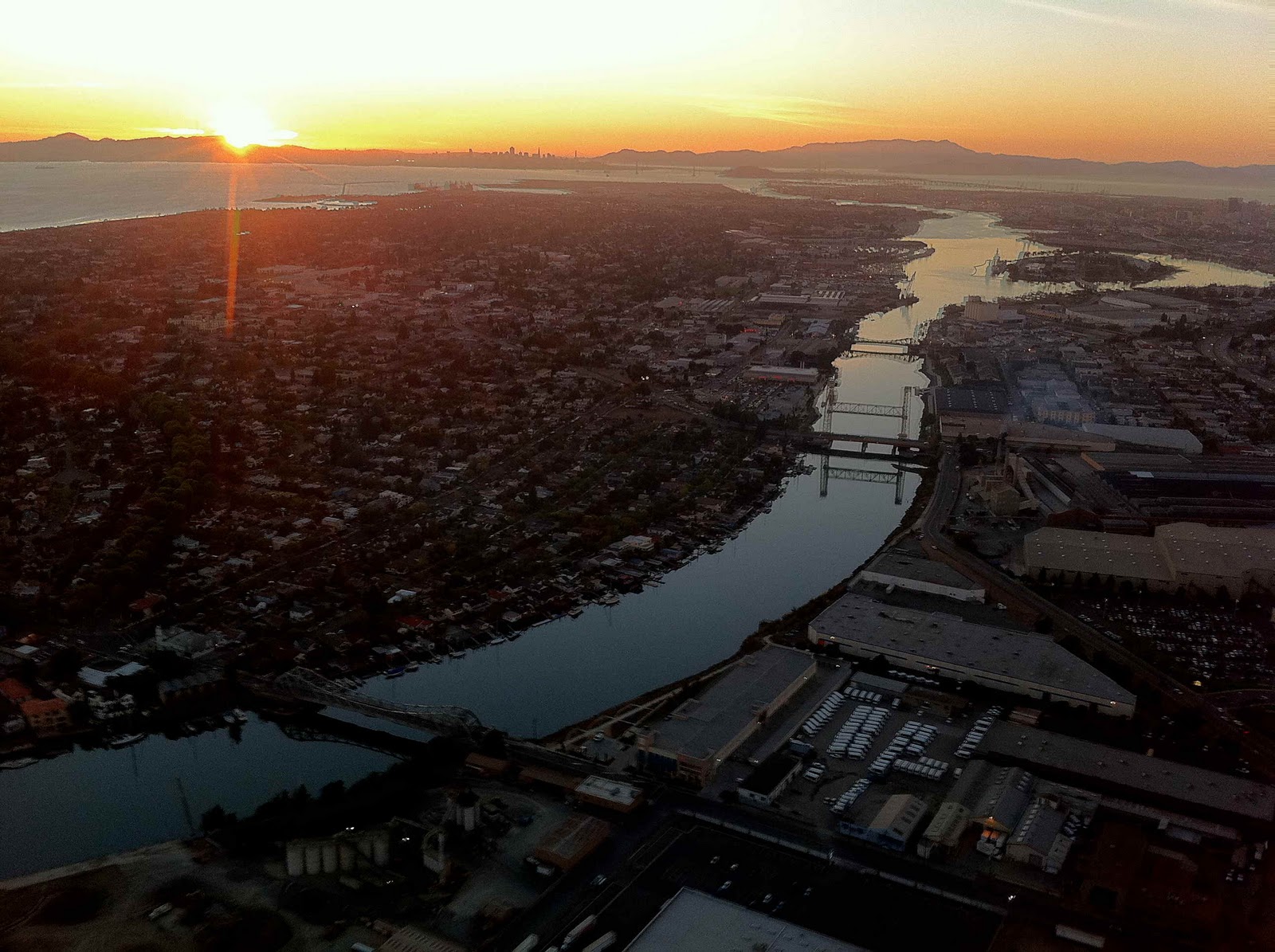
Alameda Estuary at Sunset

Friday, August 21, 2009

Eschew Obfuscation

I always get a kick out of the government's Federal Rulemaking process, a procedural system for changing regulations that has had far-reaching consequences on US citizens. When a decision is made to change a regulation, there is a Notice of Proposed Rulemaking and that's supposed to give the general public a chance to comment. If enough comments are received, the proposed changes may be modified or abandoned altogether. This is just what happened a few months ago when there was an NPR to restrict public access to bird-strike data, there was a significant and negative public reaction, and the proposed change was abandoned. This makes the NPR seems like a good process, but sometimes the notices are so arcane that it can be nearly impossible to determine just what is being proposed without being a subject matter expert or hiring an attorney.

I wrote a while ago about proposed T-routes that were submitted to the public simply as a series of latitude and longitude coordinates. Well it's happened again. There is a NPR to create a new restricted area in Southern California in the vicinity of Fort Irwin that would extend from the surface to 16,000 feet and would change the boundaries of an existing Military Operations Area. I don't fly in that area too often, but my curiosity was piqued because of how the area was described.
R-2502A Fort Irwin, CA [New]

Boundaries. Beginning at lat. 35[deg]25'48'' N., long.
116[deg]18'48'' W.; to lat. 35[deg]25'30'' N., long. 116[deg]09'46''
W.; to lat. 35[deg]23'15'' N., long. 116[deg]09'47'' W.; to lat.
35[deg]06'54'' N., long. 116[deg]30'17'' W.; to lat. 35[deg]07'00'' N.,
long. 116[deg]34'03'' W.; to lat. 35[deg]18'45'' N., long.
116[deg]18'48'' W. to point of beginning.
Designated altitudes. Surface to 16,000 feet MSL.
Time of designation. Continuous.
Controlling agency. FAA, Hi-Desert TRACON, Edwards, CA.
Using agency. Commander, Fort Irwin, CA.

Riiight ...

For their part, AOPA announced the NPR and provided a teeny tiny graphic of what was being proposed. So being a good citizen, I used MacGPS Pro and dutifully entered the six lat/long coordinates onto a downloaded LA VFR sectional. This should give you a better idea of the new restricted area being proposed.


The area is just West of the Baker airport and North of the Barstow-Daggett airport and the Daggett VOR. I don't have a problem with the new restricted airspace since it doesn't seem to eat into the narrow corridor of available airspace that pilots use when transitioning over the Mojave Desert, I do have a problem with the area not being described in a way that the average person can understand, thereby preventing or limiting the amount of comments.

Perhaps I've missed something and this proposed restricted area is a bad idea. Or maybe the idea of further carving up the national airspace system for military use rubs you the wrong way. In any event, if you'd like to comment on this NPR I'll make it very easy: Click here and fire away. You have until August 27, 2009.

Tuesday, July 14, 2009

Details, Details, Details ...


The National Aeronautical Charting Office recently announced planned changes to their business model that will affect smaller retailers who sell charts to pilots. The new plan requires yearly sales of US$5000 for a retailer to be an authorized chart agent and if smaller agents can't meet the new projected annual sales figure by October 1, 2009, they'll have to buy their charts from a bigger authorized chart agent. AOPA, for their part, says that they were involved in this decision and claims that we shouldn't worry because pilots will continue to be able to buy charts. Some say that AOPA is more concerned with their Jet-A burning contingent than the average private pilot or flight instructor, so let's investigate some of the history of aeronautical charting, what's behind the change in chart distribution, and why I think these changes may be a greater concern for GA pilots than AOPA and others are leading us to believe.

Charting History
According to NACO's web site, the US charting process had its start in the early 1800s, surveying and producing charts for marine navigation. These early charts were available to governmental agencies for free and to the public for a nominal cost, which helped recoup some of the production costs. The number of charts produced gradually increased from 10,000 or so per year in the mid-1800s to 330,000 in 1916, which was made possible by the adoption of copper and then aluminum printing plates. For the fiscal year 2007, over 10 million charts were produced.

The first aeronautical charts were produced by the Aeronautical Branch of the Department of Commerce in 1926 with the stated goal of promoting air commerce. The name was later changed to the Bureau of Air Commerce, then the Civil Aeronautics Administration, and finally to the Federal Aviation Administration that we all know and love. The first series of sectional charts were completed in 1937, they were smaller than today's VFR sectionals, and sold for 40 cents - equivalent to US$5.27 in today's dollars. Today's sectionals sell for just under US$10.

Who's Charts Are They Anyway?
Here are some fascinating facts about NACO products: Members of the US Congress are entitled to 100 free chart products a year. I wonder if they have to pay shipping or if we taxpayers foot the bill for that, too? The main consumers for the NACO chart products are, in order of greatest to least percentage:

Department of Defense - 50.7%
Authorized Chart Agent Sales to Public - 27.9%
NACO Direct Sales to the Public - 11.5%
FAA - 6.9%
Other Government Agencies - 3.0%

Who Pays?

NACO does not allow their charts to be sold below the published retail prices, with some exceptions. You and I pay full price, but the DoD (the largest consumer of chart products) receives a weighted-average discount of 86% off retail. Authorized chart agents get a 40% discount and the FAA gets all their charts for free.


The New Course

There are currently around 2,000 authorized NACO aeronautical chart agents and about 500 nautical chart agents. That number will certainly go down under the new chart retailer policy because $5000 worth of chart sales per year is a lot of charts - about 500 sectionals or about 1000 terminal area charts or 1000 terminal procedures books or 1000 low-altitude en route IFR charts or 1000 Airport/Facility Directories, or some combination of the above.

You can read about forces driving this change in this whitepaper but let me save you some time: It's about money. You see, NACO wants to become an HPO (High-Performing Organization). Translation? They want to cut their operational funding by 20 to 28% while increasing the quality of their products and services. This reminds me of an advertising agency I read about years ago in Communication Arts that had an elaborate plaque on the wall of their reception area that read:

Price,
Quality,
Schedule. Pick two.

I guess it all depends on how you define "performance." Still, the whitepaper does contain some laudable goals, namely to move from expensive negative-to-plate printing process to a computer-to-plate process that should reduce production costs. And there are some very reasonable organizational changes as well as some very intelligent changes to charting design processes and procedures.

Known Charting
In our current culture of perjury and PR bafflegab it can be hard to read between the lines, but I'll go out on a limb here: It seems clear that fewer chart retailers means that pilots will have fewer options for purchasing charts, especially on short notice. The best option seems to be to have a subscription with one of the big on-line ChartMart retailers. It's great to have your charts shipped to you in advance, but what about when you lose a chart or need to buy charts for an area that you are just visiting? Well you may, could - oh let's just get it over with - you're screwed.

On the bright side, if the FAA can't make charts readily available perhaps it could be argued that even without current charts a pilot could still claim compliance under the wording of 14 CFR 91.103 "Preflight Action: Each pilot in command shall, before beginning a flight, become familiar with all available information concerning that flight." If charts aren't available locally, they aren't available and perhaps that implies that having current charts will become a concept similar to "known icing conditions."


Digital Charts
Another option is to use electronic charts (a topic near and dear to my heart lately). Many of the products I've mentioned in recent posts provide real value to the average pilot in a way that NACO seems unable or unwilling to undertake. Many of those products are available at no cost, unless you consider the time it takes to download the data, yet the NACO white paper has some interesting things to say about possible goals for the digital charting products (emphasis mine).
If NACO were to expand its digital product offering, without copyright protection, to meet changing technology and customer needs, it is possible that NACO would experience a decline in retained receipts as revenue from the sale of digital products may not compensate NACO for the decrease in the sale of paper products. If NACO is not able to secure copyright protection, other strategies for maintaining this revenue stream will have to be examined. If NACO is not able to maintain this revenue stream, it will experience a decrease in retained receipts and become more dependent on operations funding.

Moving NACO charts from the public domain to copyright status, if that's what's being implied, would really stifle independent and cost-effective EFB development. This is the most vague part of the white paper, which is fascinating because digital charting is the wave of the future. If NACO is planning on copywriting their products, I'd like to see some proposals on how licensing fees would be handled.

Skeptical Conclusion
The NACO white paper has precious little to say about how a big agent will sell to smaller retailers who cannot meet the US$5000 per year minimum sales, but still want to offer charts. It doesn't take much imagination to see the inefficiencies in such a system, what with the additional time and cost of shipping charts from the big agent to the small agent. It's not at all clear how or even if this will work. Without some sort of oversight, it's unclear what the small retailer might be charged by the big agent (who is getting charts at a 40% discount off retail price).

So the next time you need a replacement chart or a chart on short notice, be forewarned that you will probably be out of luck. And that is what the new, High Performing Organization known as NACO will be offering us. AOPA doesn't seem to have any problem with arrangement, but as with all grand schemes, the devil is in the details.

Monday, April 13, 2009

Caution: Bird Activity

Bird strikes became newsworthy recently with the dramatic ditching of US Airways Flight 1549 in January of this year after multiple bird strikes caused both engines to fail. Now the FAA wants to keep the raw data on bird strikes "confidential" (read "secret"). The justification being offered seems tenuous, at best. Here are some quotes from the Notice of Proposed Rulemaking, which the public may comment on until April 20, 2009.
The Agency is concerned that there is a serious potential that information related to bird strikes will not be submitted because of fear that the disclosure of raw data could unfairly cast unfounded aspersions on the submitter.

When it comes to safety issues, knowledge is power, except apparently when that knowledge might scare airline passengers away from particular airports or airlines.
The complexity of the information warrants care with its interpretation; releasing this information without benefit of proper analysis would not only produce an inaccurate perception of the individual airports and airlines but also inaccurate and inappropriate comparisons between airports/airlines.

Apparently our public servants think it's okay to make public some scary data, but other sorts of sorts of scary data must be kept secret; the sort of scary data that might adversely affect commerce. If third parties, including the news media, want to access the raw data to provide their own analysis, I think that's a good thing. The FAA seems to be saying that they, and they alone, know how to interpret raw data which I find unbelievably arrogant. Considering the agency's past performance on a variety of issues (aircraft safety inspections, management of air traffic control, etc.), two things are clear: They think they know best and they have the ability to screw up an anvil.

Whatever you think, you have until April 20 to comment by fax (202–493–2251), or by mail at:

U.S. Department of Transportation
Docket Operations M–30
West Building Ground Floor
Room W12–140
1200 New Jersey Avenue, SE.
Washington, DC 20590

You can also comment on-line, though I found it to be a bit complicated. Go to this link and search for docket number FAA-2009-0245.


On the next screen, locate and click on the rules link.


On the next screen, click on the comments link and post your feelings about this proposed rule.


Here's some interpreted data on strikes that has been published to date. According to Wildlife Strikes to Civil Aircraft in the United States 1990–2007, the threat of wildlife strikes to aircraft are on the rise due to three factors. First, many wildlife populations have increased and/or have adapted to living in urban areas. Next, there are more aircraft flying - passenger aircraft operations have increased dramatically since 1980. Lastly, more airlines are flying two-engine aircraft as opposed to three or four engine aircraft and fewer engines means less redundancy and less safety.

If you think your odds of hitting a bird or other animal are low, think again. In the 18-year period between 1990 and 2007, over 82,000 animal strikes were reported. Birds accounted for over 97 percent of the encounters, terrestrial mammals for about 2 percent, bats for 0.3 percent, and reptiles for 0.1 percent. Just over half of reported bird strikes occurred between July and October and if you think birds don't fly in the dark, 38 percent of strikes occurred at night. 60 percent of bird strikes occurred at 100 feet above ground or less, 73 percent occurred at 500 feet or less, and 92 percent occurred at or below 3,000 feet. The record altitude for a bird strike? 32,500 feet. 60 percent of the strikes occurred during landing or approach to landing. 37 percent occurred during takeoff and climb-out.

58 percent of terrestrial mammal strikes occurred between July and November. 33 percent of deer strikes occurred between October and November. 64 percent of the terrestrial mammal strikes occurred at night and 89 percent occurred during the takeoff or landing phase.

Now that didn't hurt, did it?

I've had three bird strikes and countless near misses. The first, and most dramatic bird strike happened during a daytime instructional flight at about 400 feet above ground, right after takeoff. The bird was a turkey vulture that I estimate weighed 15 to 18 pounds. The bird hit the leading edge of the right wing, just outboard of the wing strut. The sound of impact was quite loud. I took control of the aircraft, verified all the primary flight controls were functioning, and we returned for landing. After landing we found a three foot portion of the leading edge was significantly deformed, though I didn't notice any change in flight handling or performance after the strike. Our encounter was fairly lucky, for us anyway. Had the turkey vulture struck the windshield, the results would have been much worse. Here's an eagle that collided with a Schweizer helicopter, hitting a passenger in the chest and causing a fractured shoulder.


On several occasions I ferried Caravans to maintenance under a ferry permit after they had been damaged by bird strikes. The Caravan driver's old joke is that if you're going to hit a bird, try to hit a duck or a goose such that you skewer it on one of the two massive pitot masts. That way you can turn the pitot heat on and cook the bird on your way in and have something to eat after you land. Of course, this is just a joke.

If my bird encounters have taught me anything it is to take immediate evasive action anytime I see birds that pose a threat. There is a lot of folklore about how birds can or may get out of your way, when they may dive and when they may climb. Some of this may or may not be true, so the best advice I can offer is don't just sit there and passively expect the birds to get out of your way. If you see birds before or during takeoff, wait or abort the takeoff until the area clears. At a towered airport, tell the tower or ground controller if birds are an issue. Many airports have bird hazing protocols and ground crews may be dispatched to scare the birds away. If you see birds during approach to landing, remember you can always go around. Again, tell the tower about what you've seen since that information can help other pilots who may be following you. Sometimes, like at night, you may not see the birds until it is too late to take any action and you have to hope for the best.

As for terrestrial mammals, I've had my share of near misses with deer, coyotes, foxes, skunks, and stray dogs. Just like birds, you need to take action if you see an animal on or near the runway where you are departing or landing. If you can see the animal, don't assume it will get out of or stay out of your way. When in doubt, aborting a takeoff or executing a go-around is the prudent thing to do.

If you do collide with a bird, remember to report the event after you have safely landed. You can now report these encounters using this on-line form. It's actually a heck of a lot easier to report a bird strike than it is to comment on Notices of Proposed Rulemaking. If you hit a bird and the remains are accessible to you, follow the instructions on the site for sending the remains to the Smithsonian for identification. I've never submitted bird remains. In the case of the turkey vulture collision, the bird fell somewhere into a slough and was "unavailable for comment."

Monday, April 28, 2008

Where Have all the Pilots Gone?

Learning to fly is a great way to get a new perspective on the world around you. It's also an opportunity to challenge yourself, to focus, to escape your daily grind, visit places you'd otherwise not see, and to make new friends. If you want to be one of a select few, becoming a pilot will put you in a pretty special group: One of 600,000 or so out of a total U.S. population of about 300,000,000. Yet the U.S. pilot population is shrinking and AOPA wants to know why. That's why they are asking pilots to contribute their ideas through this on-line survey. It doesn't take long to complete the survey and offer your suggestions. I got on my soapbox and here are some of the topics I brought up.

Pick an area in aviation and you'll find needless complexity: Aircraft procedures, maintenance, air space, visibility/cloud clearances, regulations on currency, VFR charts. Busy, successful professionals who have the money to learn to fly are put off by the endless stream of details. We certificated pilots take for granted all the messed-up stuff we have to use because we've used it for so long: We've been indoctrinated and we've lost perspective. An overhaul of the regulations and products used by student pilots wouldn't hurt.

Take a look at 14 CFR parts 61 and 91, for example. Three different definitions of "night?" Give us a break. A multitude of cloud clearance and visibility requirements? Most airspace above 10,000 feet has consistent cloud clearance and visibility requirements (5 miles, 1000' above and below, and 1 mile laterally). So for all airspace below 10,000 feet, why not just make the rule 3 miles, 1000 above, 500 below, and 2000 feet horizontal clearance from clouds. Let the requirements for class B remain at 3 miles visibility and clear of clouds. You've just removed a bunch of special cases that most pilots don't remember anyway. If some pilots and operators want to fly VFR in class G in crummy conditions, let them get special training and a rating or logbook endorsement that would cover the reduced VFR visibility and cloud clearance requirements. Right now it seems like pilots need a degree in law to understand the regulations and I'd like to see AOPA lobby for simpler and easier-to-understand regulations.

Here's some more heresy for you: VFR charts and the Airport/Facility Directory are a mess. The AF/D relies on presenting information in a positional format that the user has to memorize. Sure there's a legend at the front, but it contains another level of indirection that requires a bunch of page turning. VFR charts use basically two colors and various types of shading to depict all possible airspace. And if you don't think pilots are confused, just sit in on one of the many flight reviews I give and you'll have more than enough evidence. Sure I complain, but here's just one constructive suggestion. For MOAs, Prohibited, Restricted, and Alert areas, NACO could just put the altitude depictions and the frequency of the controlling agency right next to the airspace depiction. That way, pilots won't have to remember an identifying number, unfold their sectional in flight, and look it up on another part of the chart. Who cares about the hours of operation for an area when you can just talk to the controlling agency and ask them if the area is hot?

The FAA's NOTAM system (notices to airmen) is a mess, as anyone who has waded through an on-line briefing can attest. I understand that an overhaul of this system is in progress and let's hope the end result is an improvement.

The official weather information available to pilots is an obscure system of abbreviations and contractions that owes its existence to the historic limitations of teletypes and mainframe computers. If you need any more evidence, consider how winds aloft are encoded. It's a credit to systems like DUAT, DUATS, and others that they offer plain-language versions of area forecasts, terminal forecasts, and surface observations.

Virtually all of the questions and answers for the various FAA knowledge test are available in advance of the test and you can purchase test preparation software to help you practices for a good score. The FAA, in their attempt to create discriminator-type questions, actually has created some stellar trick questions - the very thing they tell flight instructor candidates to not do when they create tests of their own! The instrument knowledge test has a bunch of question on the automatic direction finder, NDBs, and calculating relative bearing and distance from a station based on degrees of bearing change while NDBs are being phased out faster than you can say "peak oil." For crying out loud, I don't even have access to a plane with a functioning automatic direction finder. And where are the questions on GPS, WAAS, RNAV approach minima, RAIM, or FDE?

Add up all this and the knowledge tests are a game, pure and simple. I tell my students to buy some software, practice over and over, and they'll get a score in the 90% range. The real preparation is in getting them ready for the oral portion of the practical test, where hopefully they will be able to demonstrate their level of knowledge.

Some things the FAA has done well include the publication of the Instrument Procedures Handbook and the recent updates to the Instrument Flying Handbook. These are two excellent examples of what the good folks at the FAA are capable of. And the ability to access instrument procedures on-line was a huge step forward.

It's well known that FAA inspectors have an impressive 70 to 90% first time fail rate for initial flight instructor candidates. I've recommended many CFI candidates and all of them were well prepared. Most of the candidates who passed on their first try were either airline pilots, retired military, or both. So here's a news flash: The initial CFI check ride can often be more of a hazing ritual than a practical test. There's a tremendous emphasis on rote learning and a hodge-podge of learning theory when the stated goal of instruction is to teach pilots to the correlative level of knowledge. Again, the FAA's out-of-touch culture seems to be to blame and recommending instructors are afraid to call them on it, for obvious reasons. I'm all for setting the bar high for would-be flight instructors, but initial flight instructor candidates should pass or fail based on the merits of their knowledge and performance. If we don't have a steady influx of new flight instructors, make no mistake about it, GA will die.

I could go on, but I won't. Instead, I encourage you to visit AOPA's website, get on your soapbox, and let them know what you think will stop the shrinking GA pilot population.

Wednesday, December 5, 2007

Affordable Flying

The price of 100 low-lead is approaching $6US per gallon. A newer Cessna 172 (one that was made in this century) rents for $90 to $120 per hour, sans fuel. The going rate for flight instruction in my area is anywhere from $25 per hour to over $100 per hour. I used to estimate that the total cost of earning a private pilot certificate was between $7000 and $9000, but now the cost seems to be more in the neighborhood of $8000 to $11,000.

Now if you decide to step up to the plate, the price of earning a private pilot certificate and, say, an instrument rating is equal to the price of a new car. Afterward, how can you maintain your currency without breaking the bank? Here are some suggestions and feel free to comment with your own ideas, too.

Many FBOs offer a block rate which allows you to put a larger block of your money into an account. In exchange for carrying a balance at the FBO, they offer you a discount on aircraft rental. This works to your advantage if you fly at least a couple of times a month.

Consider becoming involved with Angel Flight or a similar charitable organization. You can put your piloting skills toward a good cause and your expenses for each flight may be tax-deductable, too. If that's not your speed, perhaps the Civil Air Patrol might be the ticket.

Find a flying buddy and split flying costs. You can take turns being PIC, you get an extra set of eyes, and even when you're not manipulating the controls you still can look, listen, and learn. It's a great way to keep your head in the game while sharing your flying experience with someone who probably shares your passion for aviation. This can be a great way for instrument-rated pilots to maintain proficiency while splitting flying costs and duties.

Many pilots who have the work space, the skills and the interest take on the project of building their own aircraft. The experimental aircraft market is not for everyone, but it is a way to reduce the cost of acquiring an aircraft while keeping maintenance costs down.

The light sport pilot and aircraft initiatives have touted lower costs, both for the aircraft themselves and for pilot training. I'm still undecided on what to think of the light sport aircraft and the training of sport pilots, but some pilots have told me it's helped them keep flying affordable.

One way, and I'm not kidding here, is to buy your own aircraft. If you purchase an aircraft, by yourself or with a few partners, you may very well be able to reduce your hourly flying costs. Of course you and your partners will be saddled with all the responsibilities of aircraft ownership, but your overall costs may be lower than renting. And you'll learn a ton about aircraft maintenance in the process.

If owning an aircraft seems too expensive, there are organizations out where you really are in a club that shares ownership of one or more aircraft. The cost of entry varies with some clubs only charging a modest initiation fee while others charge hundreds (or thousands) of dollars to scare off less serious pilots. One advantage of a flying club is that since all members own a part of the aircraft, the aircraft is probably exempt from the 100 hour inspection requirement. This is a two-edged sword: The 100 hour inspection exemption can reduce hourly maintenance costs, but it may also provide an opportunity for cost-cutting and sloppily maintained aircraft. If this sort of arrangement interests you, one litmus test is to ask to see the aircraft logbooks. If the club balks, you should walk. If they allow you to look over the logs, what you read can reveal a lot about how the aircraft are cared for.

The cost of fuel has been rising at an alarming rate. While many FBOs charge close to $6US or more, there are some good deals out there and several web sites that can help you locate the good prices. Find the reasonable deals that are reasonably close and give those FBOs your business. You'll save some money and, perhaps, send a message to the larger airports. Unlike automobiles, it often makes sense and takes little extra time to fly somewhere else and buy fuel.

The bottom line is that flying takes money and if you love it, you can find a way to keep at it.

Sunday, December 2, 2007

Three Kinds of Lies

Much has been written about the pre-Thanksgiving announcement by the White House of their amazing strategy to reduce holiday flight delays, but one of the best has to be the piece by James Fallows. The astounding thing is that virtually no professionals in the news media dug into this story to see if what the White House press release said had any value or basis in fact. Without a competent Fourth Estate it seems the public (flying and otherwise) will believe anything that's put into print.

This leads to the inevitable conclusion that it's time to update Samuel Clemens' quote: "There are lies, damn lies, and PR/Marketing."

The fundamental problem with air traffic delays has to do with too little pavement (taxiways and runways), too few gates at the airports, and too many airlines trying to use that pavement and those gates at the same time of day. One contributing factor to this mess is the flying public's unrealistic expectations about how much it should cost to ship their carcasses across the country in pressurized, climate-controlled comfort: In 1955, airfare from New York to London was about $450, which in 2006 dollars would be approximately $3250.

Another contributing factor is the airline industry's unwillingness to face facts, choosing instead to lose money on most every flight and (as the old joke goes) make up for it on volume. Poor service by weary cabin crew who have seen their wages shrink and their pension plans sacked is just the icing on the cake.

So some seemingly smart people did some thinking and decided that light jet aircraft could be created that could take passengers into and out of smaller airports, thereby bypassing the bigger, clogged up airports. On the surface this sounds like a good idea - We need more pavement and these smaller airports are paved - bingo! Let's leverage the underused infrastructure of smaller GA airports. But if Americans have learned anything, it should be to have a healthy distrust when it comes to simple solutions.

I recently accompanied an aircraft owner on an IFR flight to a Class Delta airport just north of San Francisco to have his aircraft serviced at a factory maintenance facility. We were on top of the clouds at 1500 feet, but our destination was reporting overcast skies at 1200 feet and since there were no holes in the clouds, we'd need an instrument approach to get on the ground. Checking in with Center we were told that we were number five for the approach, which was somewhat surprising to me since it was 11 AM on a Thursday morning. After many delay vectors, we finally were cleared for the approach and as we circled for a landing on a different runway I noticed six (maybe more) business jets waiting in line to depart IFR. So I did the polite thing and told the tower we were canceling IFR. The response was "I already did that for you." Fascinating ...

So it seems that not all airport pavement is created equal. And while the light jet/air taxi scheme sounds promising, there are problems with relying on the infrastructure at smaller airports that few seem to be talking about.

In bad weather, the approach control facilities may only be able to handle one IFR arrival or departure at a time and that can create back-ups on the ground and in the air. This is certainly the case when arriving IFR or departing IFR at a non-towered airport since ATC will treat the airspace as a serially reusable resource - only one IFR aircraft can use the airspace at a time. So while a big city airport may be able to depart one aircraft every two minutes or 30 aircraft per hour per runway, a smaller airport may only be able to manage one departure every 10 minutes for just 6 aircraft per runway per hour.

Another problem often overlooked is that many small, non-towered airports don't have surface weather reporting. Under 14 CFR part 135, you can't fly an instrument approach procedure under IFR to a destination airport that doesn't have surface weather reporting. Even fractional operations have similar weather reporting requirements under 14 CFR part 91 Subpart K.

Departing IFR from a smaller airport, pilots operating under 14 CFR part 91 can ignore the takeoff minima published for that airport but commercial operators cannot so you may still end up waiting for the weather to improve. Other things than can delay your departure include difficulty in obtaining your IFR clearance and a departure path that conflicts with air traffic flying on nearby airways or flying instrument approaches into a nearby airport. During bad weather there may be several other aircraft trying to do exactly what you want to do. As the I Ching says, "The way is groovy."

Over the years I've witnessed housing developments growing by leaps and bounds with many developers drawn to the land surrounding a small airport, like a moth to a flame. People who choose to live close to the approach course for that airport may tolerate a Piper Cherokee flying over their houses for years, but most will not tolerate a Gulfstream coming over their house on a regular basis. So new air taxi operations had better plan for noise abatement curfews and the like.

As I waited with the aircraft owner for a simple repair to be made, I kept an eye on the weather at this busy class D airport. The forecast called for VFR conditions, eventually, but the ceilings had barely risen by the time we were ready to depart. The ATIS for our departure notified us that a ground stop program was in effect for IFR aircraft and there was still a line of small jets waiting to take off. We checked the weather and decided we would go VFR under the overcast that had risen to 1800 feet at our departure and was overcast 2500 feet at our destination. After a discussion about there not being any surface observations along our route, it was resolved we'd need a Plan B. Our Plan B, should the ceilings in between get too low around Golden Gate Fields due to strong on-shore flow, would be to return to our departure airport, file IFR, and wait in line.

As we taxied for take off and passed the line of jets waiting for their IFR release, I actually felt lucky to be in a little Cessna.

Saturday, August 25, 2007

Lemoore MOA

Well it's official. On February 4, 2008 the Department of Defense will have added yet another chunk of the National Airspace System for military training over the Lemoore Naval Air Station in California's San Jouquin Valley. Apparently there have been a lot of meetings, starting back in October of 2003. I say apparently, because I only got wind of the proposed Military Operations Area (MOA) about a year ago. It appears AOPA and several local pilots, FBOs, and other operators were consulted about the design of the airspace.

When I first started training to be a private pilot, I remember how startled I was at the sheer volume of airspace set aside for military operations is the U.S. I wish I had a percentage figure, but I don't. A quick search of the internet did reveal that in 1987 and 1988 the General Accounting Office criticized the DoD and the FAA for inefficient use of existing special use airspace and for the lack of utilization data. In 1989 the DoD and the FAA committed to creating a special use airspace scheduling system, but it wasn't until 1995 under the Clinton Administration that a task force appears to have been formed to further the cooperation of military and civilian airspace users to reduce airline delays. The airlines are complaining mightily these days that the skies are too crowded, so this sort of cooperation sure seems like a good idea. It's just not clear that it's happening.

The DoD says the new MOA is needed because the F18 squadrons based at Lemoore and the F16 National Guard aircraft based at Fresno often find the restricted areas over China Lakes and Edwards Air Force Base are too crowded to use for their training. This forces them to fly long distances and burn lots of fuel just to do training. The claim is that most of the training in the new MOA will be high altitude operations at 15,000 feet and above. No ordinance will be carried and no "aggressive maneuvers" will be allowed, according to the Lemoore website.

This makes one wonder why the area was not designated an Alert Area instead of an MOA: The main difference between the two being that in an MOA, military aircraft are exempt from the 250 knot speed limit below 10,000 feet while in an Alert Area they are not. Aircraft in an MOA are also exempt from the restriction on aerobatic flight in Class E or D surfaces areas or on an airway.


It's hard to tell from the graphics provided on the Lemoore website what the floor of each section of the MOA will be. Only sector C is explicitly mention as having a floor at 16,000 feet MSL. The other sectors may start as low as 5000 feet MSL, but that's just a guess. We won't have long to wait though, because the new MOA will be depicted on the next San Francisco sectional due out at the end of August, even though the MOA is not supposed to go active until February 2008.

Sector C of the new MOA was design as a corridor between Visallia/Fresno and the rest of the valley to the northwest and the reason the floor of the MOA is so high there is pretty easy to guess - there's a heck of a lot of freight and passenger operations that need to get back and forth in that area.

When the weather is bad in the valley the new MOA could limit a pilot's options. Winter time sees the valley regularly socked in for weeks at a time with thick Tule Fog and freight dogs will often go to some pretty small airports if the weather allows them to land. Most of these alternate airports are probably outside the boundaries of the new MOA, but the most efficient routes to those airports are not. Air Mass thunderstorms are not unheard of during the summer and they can require a lot of maneuvering to avoid. Remember that restricted and special use airspace exists primarily to separate military aircraft from IFR traffic?

One hopes that the new MOA will have minimal impact on VFR traffic transitioning through the valley along the I-5 corridor, but it could prevent IFR aircraft from getting a direct-to routing. I used to regularly transition through the affected area when I flew freight, but ATC never gave us a direct routing to our destination until it was obvious a direct route would be clear of Lemoore's Class Delta airspace by several miles.

Now every pilot should know that you can fly through an active MOA anytime you want. You're not even required to talk to anyone on the radio, but not talking to Lemoore approach when the area is hot would just be stupid. I still fly regularly through this area with commercial pilot candidates on long cross-countries, with one stop usually being at Harris Ranch for pit stop and a bite to eat. The Lemoore website says the MOA should only be active Monday through Friday from 8am to 10pm (6pm on Fridays). It may be active one weekend a month for National Guard training.

Since this new area will be an MOA, not an Alert Area, I won't be surprised if the floor of some of the MOA's sectors turn out to be below 10,000 feet. And I suspect there's a good chance that some fast moving aircraft will soon be flying over that area as low as 5,000 feet MSL.

Time will tell ...

Tuesday, February 27, 2007

A Royal Trouncing

Anyone involved in general aviation should already know that the FAA has announced a proposal to change the way in which air traffic control functions are funded in the U.S. The short version is that they want to eliminate taxes that airline passengers pay, replacing that source of funding with a near quadrupling of taxes on aviation gasoline and jet fuel as well as user fees for GA aircraft that request ATC services around large airports.

The strange thing is that the Office of Management and Budget projections show that the current funding scheme is adequate to meet the needs of the FAA and the flying public. So what's the big deal, you ask?

Many pilots to whom I have spoken don't seem to be too worried, resting assured that "they don't have the votes in congress" to implement such a radical shift in funding. While this may be true, it is still important that all GA pilots let their voices be heard. I believe that this privatization debate needs to be stopped dead in its tracks.

Here's what you can do to stop the FAA's proposal:

1) Join AOPA, EAA, or both.

2) Fax a letter to your senators and your member of congress asking that this proposal be stopped. If you're not sure what to say, here are some suggestions.

3) In addition to faxing your letters, mail them as hardcopies, too.

As one of the pilots I fly with so eloquently put it:
We need to kick their butts so badly that they won't come back with another such proposal for at least 10 years.
Related Posts Plugin for WordPress, Blogger...